


An Accidental Record: Florida to Greenland Round Trip
An Accidental Record: North America East Coast Transit
We didn't go looking for a record. There was no stopwatch, no declaration, and no sense that this had to be “a thing.” Only later, after routes were compared and distances tallied, did it become clear that no hybrid-drive motor yacht of this size appears to have completed a documented round-trip from southern Florida to the high Arctic and back along the North American Atlantic seaboard.
If this was a record, it was discovered after the fact.
Vanguard was built for function, not fashion. Aluminum, ice-strengthened, MCA Category 2 specified, hybrid drive with no conventional generators. The idea was simple: go further, stay longer, and keep moving when conditions turn against you. The 2025 season would prove whether that thinking held up offshore.
Leaving the Comfort Zone
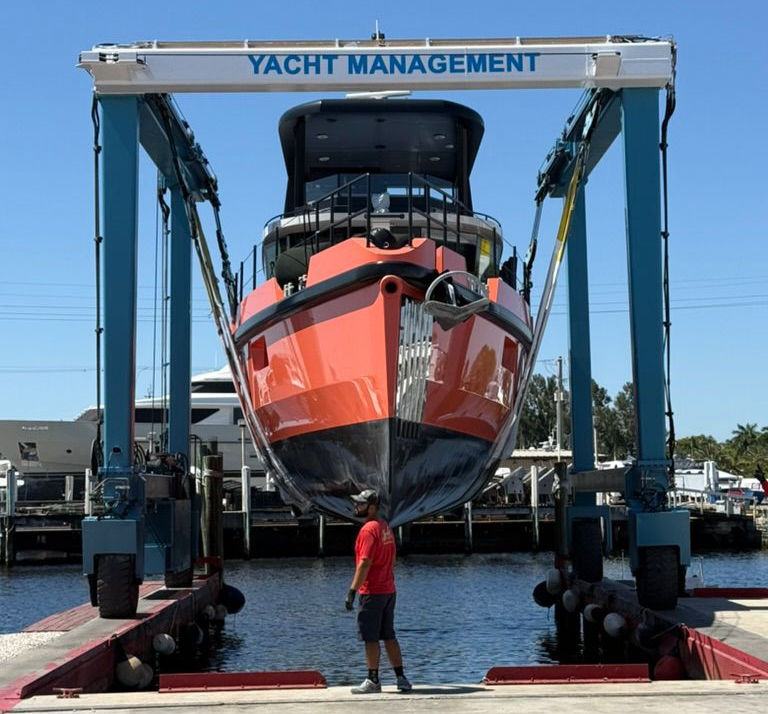
We departed Fort Lauderdale after final work at Yacht Management and slipped across to Port Everglades. From there the coast unfolded in familiar steps. Hilton Head, Charleston via the Intracoastal, Georgetown until the tone changed approaching Cape Hatteras, with a northerly already setting in.
North of Hatteras the margins tightened. Norfolk and the Chesapeake gave way to exposed Atlantic legs, shallow inlets, New York Harbor, the East River, and the relentless tidal arithmetic of Long Island Sound. New England followed Groton, Jamestown, the Cape Cod Canal, Provincetown, and Gloucester, but weather windows shortened and systems stopped being pampered.
Maine sharpened everything. Rockland. Rockport. Belfast. Bar Harbor. Halifax came next, the last familiar port before the map stopped offering easy exits.

Commitment North
From Halifax the voyage became deliberate. Atlantic Canada passed in hard miles and harder decisions: Canso, Port Hawkesbury, the Bras d'Or system, Codroy, Port au Choix, St. Barbe, and finally the Strait of Belle Isle.
Here we met proper ice—large bergs drifting south in the Labrador Current. Port au Choix sent us off with 90-knot winds tearing through the anchorage. Violent, uncomfortable, but preferable to being pinned to the dock with a six-foot swell rolling straight in.
From Belle Isle to Nuuk is not a passage you embellish: 820 nautical miles of cold, grey water, often hostile. At night, charts become secondary. Radar becomes everything.
Greenland Doesn’t Care
Greenland offered no easy welcomes. Nuuk first, then north through Aasiaat, Qeqertarsuaq, and into Disko Bay. Arctic Commando and Aasiaat Radio became constants. Ice navigation stopped being an event and became routine. Big bergs upwind. Grounded ice watched carefully. The small stuff and the dangerous stuff are never ignored.
And if this voyage sounds rough, spare a thought for the four young Norwegian men we met sailing a 50-year-old Colin Archer ketch south from Pond Inlet and the Northwest Passage. No excess. No margin. Just seamanship and stubbornness—life pared to the bone.
Rodebay marked 72° North and another attempt through the ice guarding Ilulissat. Once through, progress eased in sheltered coastal strips. We departed again in dense fog, following Inuit boats and trusting local knowledge of ice leads more than anything coming from space.
Then we turned south.


The Long Way Home
Nuuk had one final lesson. A 90-knot storm pinned Vanguard between two battered ex-Russian ice-hardened supply vessels. When the first snow settled ashore, the decision was obvious. We left. An easterly carried us west toward Baffin Island, skirting the northern edge of Hurricane Erin. She passed south but not before reminding us who was in charge.
West of Port au Choix in the Gulf of St. Lawrence, the reminder arrived properly. Darkness. A hard hit. Bow up, stern down. Engine-room bilge alarms screaming. Four hours to shore. Repairs in Neddy Harbor happened only because Newfoundlanders see a damaged boat as a sailor in trouble, not an inconvenience.
From there the route unwound in reverse: Halifax. New Bedford. New York. Cape Hatteras again. A good northerly was forecast. Three boats were heading south. By then, we knew what Vanguard could tolerate. We left Sandy Hook anyway. Carefully.
Charleston followed, then the final run to Fort Lauderdale. When the lines were secured again, the numbers finally settled: 7,450 nautical miles, once port movements, day running, ice maneuvering, and local operations were included.
What Stayed With Us
We pushed Vanguard harder than most yachts of her size will ever be pushed. We found weaknesses. We confirmed strengths. The hybrid system carried propulsion and all electrical loads throughout the expedition, averaging around 4 liters per nautical mile across the full voyage.
But that isn't what lingers. What remains are the people. Two sons who will always remember the year we went north. Valery, our Ukrainian delivery skipper. Nick, an ice pilot and Viking by nature, and his sailor wife, Estella. Magnus and Julia. Eric and Caleb. Friends in Darien. Canadian customs officers who chose pragmatism over procedure. Greenland Air pilots who flew in spares and opened their homes. Newfoundlanders who opened workshops, kitchens, and doors when we arrived tired and damaged.
If you want a holiday, go to the Bahamas.
If you want your perspective shifted, go north.
And when you think you've gone far enough go further.Until it hurts.
That's where exploration begins.
The Route in Numbers (2025)
Total Distance Logged: 7,450 NM (includes port movements, day running, ice manoeuvring, and local operations)
Regional Breakdown:
U.S. Southeast & Mid-Atlantic: ~860 NM
U.S. Northeast & New England: ~1,125 NM
Atlantic Canada: ~1,210 NM
Labrador Sea → Greenland (outbound): ~820 NM
Greenland coastal operations: ~1,000 NM
Greenland → Canada (return): ~820 NM
U.S. East Coast return to Florida: ~1,615 NM
TOTAL: 7,450 NM
Why the Hybrid Drive Mattered
Vanguard operates without traditional standalone generators. All propulsion and onboard electrical loads are supplied through her hybrid-drive system, allowing propulsion engines to act as power plants when required and enabling flexible load management underway or at anchor.
In practical terms, this meant high electrical capacity for navigation, heating, and hotel loads in Arctic conditions, reduced fuel consumption over long distances, and system redundancy without complexity. Averaging ~4 L/NM across a full North Atlantic and Arctic season, the system proved itself not as a concept but as a working solution in conditions where failure is not an option.


Forgot to log in—I'm "guest" below.
I, for one, would like to know more about what you hit our there that caused you to have to return to Neddy Harbour, and what the repairs consisted of. Interested people want to know! Best wishes from Australia, and best wishes for the New Year.